
The Six Lenses of Homeownership: How Different Stakeholders Price Your House (and How You Should Too)

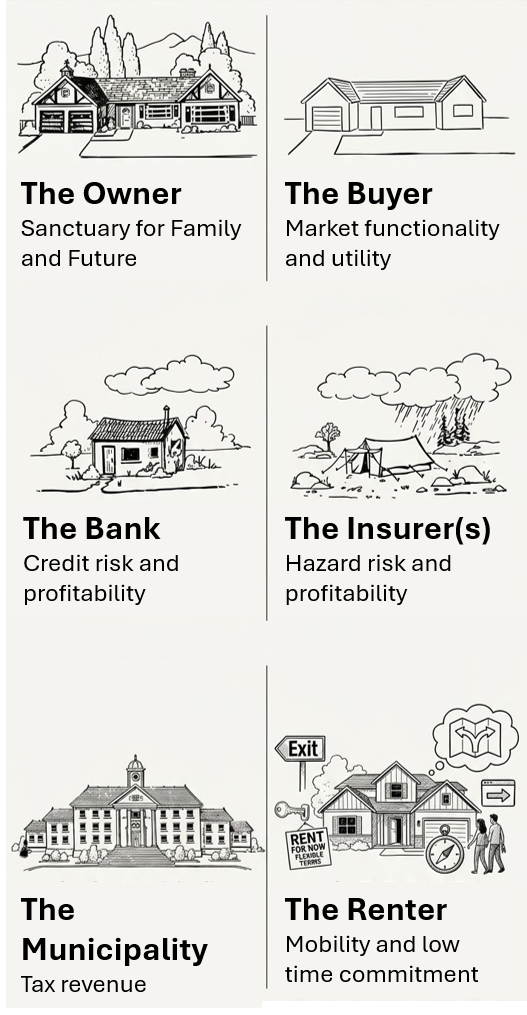
Stepping into a house often reveals a sanctuary, a setting for family traditions, or a dream kitchen. Modern housing represents far more than a physical shelter or a simple generational foundation. Residential real estate operates as a complex financial ecosystem. Multiple institutions and market actors evaluate the same physical property through fundamentally distinct lenses. Understanding how six separate parties assess a home allows buyers, owners, and real estate investors to make confident financial choices.
The Six Lenses
You (Sanctuary and memory lens) You see maximum utility, personal connection, potential for growth, and family stability. To you, the home represents a personalized living space tailored to your daily routine and evolving needs across every stage of life.
The Buyer (Functionality lens) Future buyers see a functional, standardized asset. Stripped of your personal memories, buyers evaluate square footage, floor plan flow, and immediate utility. They generally price the property below your emotional valuation.
The Bank (Lender risk lens) Lenders focus on collateral risk profiles. To a mortgage provider, your home represents a conservative underlying asset securing the outstanding loan balance during unexpected default events.
The Insurance (Hazard risk lens) Insurers analyze vulnerability and hazard exposure. To an insurance underwriter, your property remains a physical asset subject to weather events, water intrusion, fire, or liability claims.
The Municipality (Revenue lens) Local governments evaluate property through the baseline tax assessment lens. To municipal assessors, your property represents a stable revenue base funding public infrastructure, emergency response systems, and local school districts.
The Renter (Flexibility lens) Renters prioritize low-commitment living and operational optionality. Individuals seeking rental properties view housing through a mobility mindset, preserving personal career agility and financial flexibility without long-term capital ties.
Operationally Handling the Lenses: Avoid Decision Stagnation
Evaluating six distinct perspectives simultaneously can trigger decision fatigue when left as an unstructured exercise. Operationalize these lenses into a weighted criteria matrix during your home search to maintain clarity:
Assign Weights Based on Your Time Horizon Define core priorities prior to touring properties. A five-year starter home demands higher weight on The Buyer and The Renter lenses, prioritizing exit flexibility. A thirty-year long-term residence calls for higher weight on your personal utility and municipal tax trends.
Score Candidate Properties (1–10) Rate prospective homes across each lens to transform qualitative feelings into actionable, clear scores.
Uncover Hidden Alignment Gaps A property might score a ten on your emotional scale while scoring a four on insurance exposure or lender appraisal guidelines. The matrix highlights these systemic mismatches before you submit an offer.
Why the Multi-Lens Perspective Matters for Decision Confidence
Evaluating real estate across six distinct operational lenses improves overall personal balance sheet management:
When Buying Do not pay purely based on personal utility. Verify whether the lender and future buyers will validate your target valuation.
When Remodeling Evaluate whether an upgrade adds clear market value for future buyers or functional appeal for renters, rather than simply raising your municipal tax assessment or property insurance obligations.
When Planning Retirement Recognizing how real estate transitions from a primary family hub into a flexible income asset allows smooth life transitions, including downsizing, equity release, or converting a residence into a rental property using modern financing options.
A home serves families best when viewed as a dynamic balance sheet asset capable of supporting changing financial objectives across every season of life.


Comments